Introduction to the Helvetic Clinics Scandal
The helvetic clinics scandal has attracted online attention from people interested in dental tourism, healthcare transparency, patient reviews, and the reputation of international dental providers. Helvetic Clinics is associated with dental treatment in Budapest, Hungary, and has marketed its services to international patients seeking dental procedures outside their home countries. Over time, online discussions have raised questions about its branding, certifications, reputation, and business practices.
When researching the helvetic clinics scandal, it is important to understand how the controversy developed and why different sources describe the situation differently. Some online publications have made allegations concerning the clinic’s professional image and review practices, while the clinic has publicly rejected accusations and presented its own explanation. These competing positions make careful research particularly important.
A responsible article should not automatically accept every accusation as fact or assume that a company’s denial resolves every question. Instead, readers should examine the original claims, available supporting evidence, responses from the organization, and any independently established findings.
This article explores the background of the helvetic clinics scandal, the allegations that have circulated online, the clinic’s response, the importance of patient reviews, and the practical lessons for people considering dental treatment abroad. The objective is to provide a balanced overview without presenting unverified accusations as proven misconduct.
What Is the Helvetic Clinics Scandal
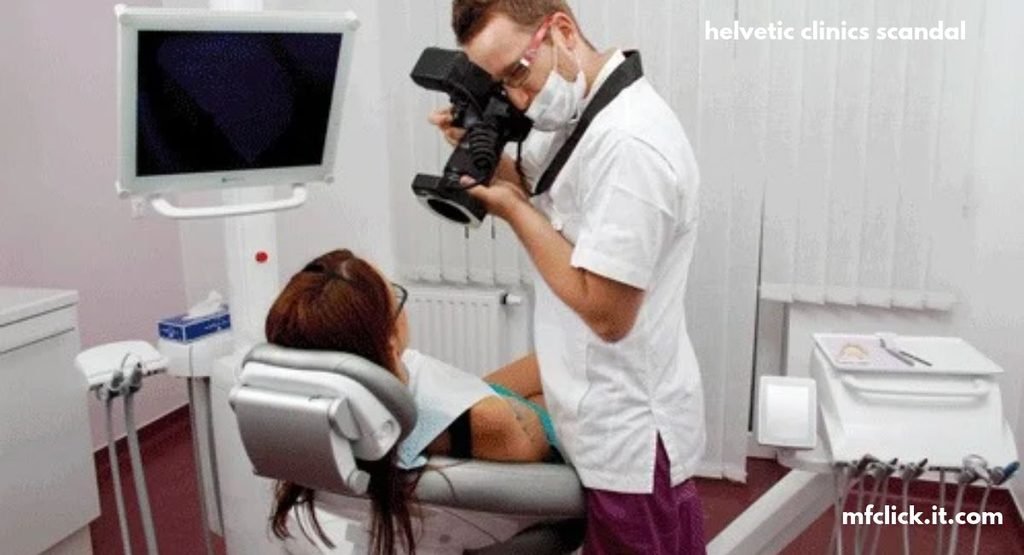
The term helvetic clinics scandal refers to online discussions and publications concerning alleged problems associated with Helvetic Clinics. The controversy has been connected primarily to questions about the clinic’s branding, its presentation of quality standards, and claims concerning online reputation management.
An important part of understanding this subject is identifying the difference between a controversy and an officially established violation. A controversy can begin when a person publishes allegations, questions a company’s claims, or shares documents that they believe support a particular interpretation. Whether those allegations are accurate requires further investigation.
The phrase became particularly visible through online publications discussing the clinic in 2017. One critical blog post alleged that the clinic’s Swiss-sounding identity and certain quality-related claims did not accurately reflect its operations. The same publication raised questions about certification and online reviews. These were allegations published by critics, not findings that should automatically be treated as legally or independently proven.
The clinic subsequently published its own response to the scandal-related discussion. Its response rejected the accusations and described the controversy as misinformation rather than evidence of wrongdoing.
Consequently, the helvetic clinics scandal should be understood as a subject involving competing accounts and questions that require verification. Readers should not confuse the existence of allegations with proof of fraud, professional misconduct, or unsafe treatment.
Background of Helvetic Clinics

Helvetic Clinics is associated with dental services in Budapest, Hungary, and has targeted patients from other European countries and international markets. Dental tourism allows patients to travel abroad for procedures such as implants, crowns, veneers, and other forms of dental treatment.
International dental providers often promote their services through websites, patient testimonials, treatment photographs, information about professional qualifications, and comparisons with prices in other countries. These methods can help patients understand available options, but they also make accurate representation especially important.
The name of a healthcare provider can influence public perception. Some patients may associate words connected with Switzerland with precision, reliability, or high standards. However, a company’s name alone does not establish its country of registration, ownership, operating location, or professional credentials.
Patients should distinguish between a clinic’s brand identity and its actual legal and clinical arrangements. The relevant questions include where treatment takes place, which legal entity provides the service, who employs or contracts the treating professionals, and which regulatory framework applies.
These details are important when considering the helvetic clinics scandal because several online allegations have focused on how the organization presented its identity and quality-related claims.
How the Helvetic Clinics Scandal Started

The helvetic clinics scandal gained attention through online commentary published in 2017. A critical blog post claimed that information presented about the clinic’s identity, professional standards, and certifications deserved closer scrutiny. It also raised allegations about the authenticity of online reviews.
These claims contributed to a wider online discussion about whether the clinic’s public image accurately represented its operations. The subject attracted interest because international patients often depend on online information when deciding where to receive treatment.
However, the origin of an allegation does not determine whether it is true. A critical publication may contain useful evidence, incomplete information, inaccurate interpretations, or a mixture of these elements. Each significant claim should therefore be evaluated separately.
Readers should ask what documentation supports the original allegation, whether that documentation can be independently verified, and whether later information changes the original interpretation. It is also necessary to consider whether the organization involved has provided a substantive response.
The clinic’s later public statements rejected the idea that the allegations demonstrated an actual scandal. That response is part of the available account, but it should be assessed alongside the original claims and any independent evidence.
Understanding how the helvetic clinics scandal began helps readers avoid repeating simplified versions of the story without considering the context in which the allegations appeared.
Allegations About Branding and Swiss Identity

One subject discussed in connection with the helvetic clinics scandal is the relationship between the clinic’s name, its branding, and the location of its dental services.
Critics have questioned whether the clinic’s Swiss-associated identity could lead some prospective patients to assume that its principal operations or professional standards were based in Switzerland. Such concerns raise a broader question about how healthcare organizations communicate their location and identity to international customers.
Branding can influence expectations, particularly when a patient is choosing treatment in a foreign country. However, a Swiss-sounding name does not, by itself, prove that a business has misrepresented its ownership or location. Establishing misleading representation would require examining the specific wording used in advertising, the context in which it appeared, and the information available to customers.
Patients can reduce uncertainty by checking the actual treatment address, the legal entity responsible for the service, the country in which the professionals are registered, and the applicable complaint procedures.
Clear information about these matters allows patients to make decisions based on facts rather than assumptions created by a company’s name or visual identity.
The branding-related discussion surrounding the helvetic clinics scandal therefore illustrates the importance of transparency in international healthcare marketing, without establishing that every criticism of a brand is necessarily justified.
Questions About Certifications and Quality Standards

Another major topic associated with the helvetic clinics scandal concerns claims about certification and quality standards. In healthcare, certifications can provide information about particular systems, processes, or standards, but their meaning depends on the issuing organization and the scope of the certification.
A certification should be evaluated by checking the issuing body, certificate number, relevant legal entity, covered location, validity period, and activities included in its scope. Patients should also determine whether the certification relates to management systems, clinical processes, professional training, or another specific area.
These distinctions matter because a quality-management certificate does not necessarily guarantee a particular patient’s treatment outcome. Nor does the presence of a quality logo automatically establish that every clinical procedure has been independently assessed.
The allegations published by critics raised questions about the verifiability of certain quality-related claims. Helvetic Clinics, in contrast, has publicly stated that its ISO 9001:2015 certification was renewed in 2024 and that the certification was valid through 2026.
That statement represents the clinic’s own published position. Anyone seeking to verify the certification should consult the relevant certification provider and confirm the exact scope and validity directly rather than relying exclusively on either critical commentary or promotional material.
The appropriate conclusion is that certification claims should be checked against original records. The helvetic clinics scandal does not, by itself, establish that a particular certificate is genuine or invalid.
Allegations About Online Reviews and Ratings
Online reviews are another important part of the helvetic clinics scandal. Prospective dental patients frequently use review platforms to compare providers, understand the treatment experience, and evaluate customer service.
Positive reviews can describe helpful staff, clear communication, satisfactory treatment, and convenient arrangements for international visitors. Negative reviews may raise concerns about waiting times, costs, communication, treatment outcomes, or aftercare.
The controversy arose partly because critics alleged that positive reviews or ratings associated with the clinic were not entirely authentic. These claims should be treated as allegations unless supported by independently verifiable evidence.
A high rating alone cannot prove that reviews have been manipulated. Similarly, an allegation of paid or fabricated reviews should not be accepted merely because it appears in a blog post or social media discussion.
A more reliable assessment examines multiple independent platforms, the detail provided in individual reviews, patterns over time, and whether reviewers describe specific experiences. Patients should also consider whether reviews relate to the same location and type of treatment.
Review platforms have limitations because individual experiences may not represent the entire patient population. A review can provide useful information about service quality without proving a clinical conclusion.
When investigating the helvetic clinics scandal, readers should therefore separate documented review manipulation from allegations about review manipulation. That distinction is essential to a fair evaluation of the clinic’s reputation.
Helvetic Clinics’ Response to the Controversy
Helvetic Clinics has publicly responded to the helvetic clinics scandal through material published on its own websites. In a statement dated January 2025, the clinic rejected the allegations and argued that the controversy was based on unfounded rumors and misleading information.
The clinic’s response emphasized its dental services in Budapest, its quality-related claims, and its experience serving international patients. It presented a substantially different interpretation from the critical accounts that circulated online.
An organization’s response is an important part of responsible reporting because the subject of an allegation should have an opportunity to explain its position. However, a response should be evaluated on the basis of its specific claims and supporting documentation.
Likewise, critics should be expected to provide evidence for serious accusations. A statement that an organization has acted improperly requires more than repetition of an earlier claim.
Readers should examine whether a response addresses the central allegation directly, provides verifiable records, and clarifies any factual misunderstandings. They should apply the same standards to the original accusation.
The clinic’s denial does not independently establish that every criticism is false, just as the publication of accusations does not establish that every claim is true. The strongest conclusions come from independent evidence that can be checked by other people.
This balanced approach is particularly important when researching the helvetic clinics scandal because the available public discussion includes both critical allegations and the clinic’s own defense.
Dental Tourism and Patient Expectations
Dental tourism is an important part of the wider context surrounding the helvetic clinics scandal. Patients may travel abroad because they are seeking lower prices, access to particular procedures, shorter waiting periods, or treatment packages that combine dental services with travel arrangements.
Dental treatment abroad can offer practical advantages, but it also requires careful planning. Patients must consider the quality of the proposed treatment, the qualifications of the professionals involved, the total cost, and the arrangements for follow-up care.
Some dental procedures require several appointments or a healing period between stages. If a patient returns home before treatment is complete, additional travel may be necessary. Unexpected complications can also create expenses that were not included in the original quotation.
Before committing to treatment, patients should request a written treatment plan that explains the proposed procedures, materials, estimated costs, alternatives, and possible complications. They should ask which professional will perform each procedure and how their records will be made available to another dentist.
Aftercare deserves particular attention. Patients should establish who will respond if a problem develops after they return home and whether any follow-up services or guarantees have written conditions.
The helvetic clinics scandal highlights why patients should research the practical arrangements of dental tourism rather than making a decision based only on promotional claims, online ratings, or an attractive initial price.
Patient Safety and Professional Accountability
Patient safety is a fundamental consideration when evaluating any healthcare provider. Reputation matters, but it should never replace an examination of professional qualifications, clinical procedures, informed consent, and follow-up arrangements.
Before undergoing a dental procedure, patients should receive an explanation of the expected benefits, significant risks, available alternatives, and likely treatment stages. They should have enough time to consider the information and ask questions before making a decision.
Patients should also know who is responsible for their care. When multiple professionals participate in a treatment plan, the clinic should explain their respective roles and responsibilities.
If a patient experiences an unexpected outcome, the situation should be assessed on its own facts. Dental procedures can involve complications even when appropriate care has been provided, and an unsuccessful result does not automatically establish negligence.
Where concerns remain, an independent dental opinion can help explain the patient’s condition and the options for further treatment. Relevant records, diagnostic images, invoices, and consent documents can assist that assessment.
A formal complaint may be appropriate if a patient believes that professional standards were not met. The applicable process depends on the country, the nature of the complaint, and the legal entity responsible for the treatment.
The helvetic clinics scandal should therefore encourage careful investigation and informed decision-making, not unsupported assumptions about the safety of every procedure or the conduct of every professional.
How to Evaluate Information About the Helvetic Clinics Scandal
Readers who want to understand the helvetic clinics scandal can use a structured process to evaluate the information available online.
First, identify the exact allegation. A question about branding is different from an allegation concerning certification, and both differ from a complaint about a particular patient’s treatment.
Second, establish the source and publication date. Older articles may omit later responses or developments, while recently published material may repeat historical claims without providing new evidence.
Third, look for original documentation. Certification records, official professional registers, published legal decisions, and detailed contemporaneous records may help establish what can be verified.
Fourth, distinguish allegations from established findings. An online complaint, an investigation, a regulatory decision, and a court judgment are not interchangeable.
Fifth, review the organization’s response. Consider whether the response provides verifiable information that addresses the specific concern rather than relying entirely on general promotional statements.
Finally, assess the remaining uncertainty. If a question cannot be resolved from publicly available evidence, it is more accurate to say that it remains unverified than to make a definite accusation or declare every concern unfounded.
This approach helps readers evaluate the helvetic clinics scandal using consistent standards and avoid being influenced solely by dramatic headlines.
Lessons for Patients Considering International Dental Treatment
The discussion surrounding the helvetic clinics scandal offers several practical lessons for anyone considering dental treatment abroad.
Patients should verify the clinic’s location and legal identity before making financial commitments. They should confirm the qualifications and professional registration of the people who will perform their treatment.
They should also request a detailed written quotation. The quotation should identify the procedures included, any potential additional charges, and the circumstances in which the treatment plan or price could change.
Another important step is obtaining an independent opinion when a proposed treatment is complex, irreversible, or significantly different from previous recommendations. A second opinion can help patients understand whether the proposed procedure is appropriate for their needs.
Patients should consider the full cost of treatment, including travel, accommodation, repeat visits, and possible corrective care. Savings on the initial procedure do not necessarily represent savings over the entire treatment period.
Finally, patients should maintain copies of their dental records and clarify aftercare arrangements before traveling. These precautions are useful regardless of the clinic selected.
The most valuable lesson is that patients should make decisions based on verifiable information, realistic expectations, and their individual clinical needs rather than relying exclusively on marketing claims or controversy-related search results.
Frequently Asked Questions About the Helvetic Clinics Scandal
What is the helvetic clinics scandal about
The phrase refers to online allegations and public discussion concerning Helvetic Clinics, including questions about branding, certification claims, and online reviews. The allegations and the clinic’s public response should be examined separately.
When did the helvetic clinics scandal begin
A critical online publication discussing allegations about Helvetic Clinics appeared in 2017. The clinic later published its response to the controversy, including a statement dated January 2025.
Are the allegations against Helvetic Clinics proven
The existence of online allegations does not establish that they are proven. Each claim requires independent verification through reliable documentation or authoritative findings.
What has Helvetic Clinics said about the scandal
The clinic has publicly rejected the accusations and characterized the controversy as based on unfounded rumors and misinformation. Its statements represent the clinic’s position and should be considered alongside independently verifiable evidence.
Why are certifications important when choosing a dental clinic
Certifications may provide information about particular quality systems or standards. Patients should verify the issuing organization, scope, validity, and location covered by any certification claim.
Can online reviews establish whether a dental clinic is trustworthy?
Reviews can offer useful information about patient experiences, communication, and service. However, they do not independently establish every aspect of clinical quality or prove that an organization has engaged in misconduct.
What should patients check before choosing a dental clinic abroad?
Patients should verify professional qualifications, request a written treatment plan and full quotation, understand the risks, investigate the clinic’s legal identity, and establish how follow-up care will be provided.
Conclusion Understanding the Helvetic Clinics Scandal
The helvetic clinics scandal remains a topic of online discussion because allegations about branding, certification, and review practices raise broader questions about transparency in international healthcare. The subject also illustrates how online publications, company responses, and patient concerns can contribute to competing interpretations of a controversy.
A fair assessment requires separating allegations from verified facts. Critical publications should be examined for evidence, while the clinic’s own statements should be evaluated against original records and independent information. Neither accusations nor denials should automatically be treated as conclusive.
For prospective dental patients, the most practical response is to focus on professional qualifications, written treatment plans, transparent pricing, informed consent, and reliable aftercare. These factors provide a more useful basis for choosing a provider than relying on a single online article or a reputation-related keyword.
Ultimately, researching the helvetic clinics scandal is an opportunity to understand the importance of evidence-based reporting and informed healthcare decisions. By checking claims carefully and recognizing what remains uncertain, readers can approach the subject responsibly and make better-informed choices about dental treatment.